Research

Publications

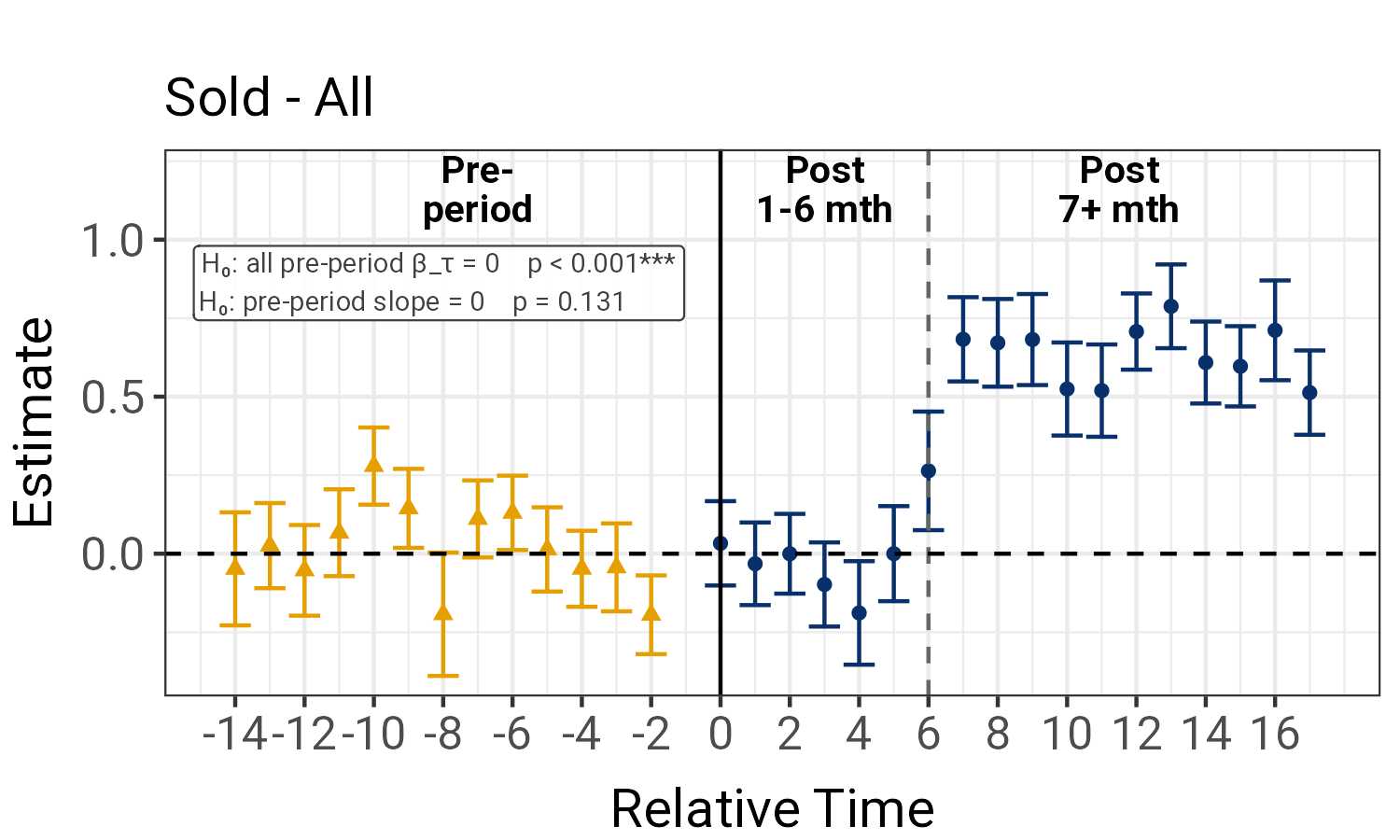
Event study: new images published after GenAI was allowed.

Generative AI & Creative Goods: Market Expansion, Crowd-out, and Copyright

with Sam Goldberg

Accepted, The Quarterly Journal of Economics, 2026

AbstractSSRN

We study how generative artificial intelligence (GenAI) affects creative goods markets using data from a large stock images marketplace. In December 2022, the platform announced it would allow artists to sell GenAI-produced images, subject to two conditions: all GenAI images must be labeled, and GenAI would be prohibited in certain markets. We exploit this policy variation using a difference-in-differences design. We estimate a 136% increase in image production and 47% increase in active artists, accompanied by a 15% decline in non-GenAI production and 29% decline in non-GenAI active artists. On the demand side, total sales increase by 82%, but non-GenAI sales fall by 28% and non-GenAI sales rates decline by 3%. We use image embeddings to develop novel measures of image quality, characteristics, and market composition. We find that quality increases by 9% overall and 2% for non-GenAI content, suggesting low-quality non-GenAI artists exit. Our product characteristic measures indicate that GenAI production is heavily concentrated in characteristic space, potentially limiting the value of these images to the market. Non-GenAI production responds to GenAI by differentiating into niches. We discuss implications for copyright policy and the longer-run sustainability of original creative work.
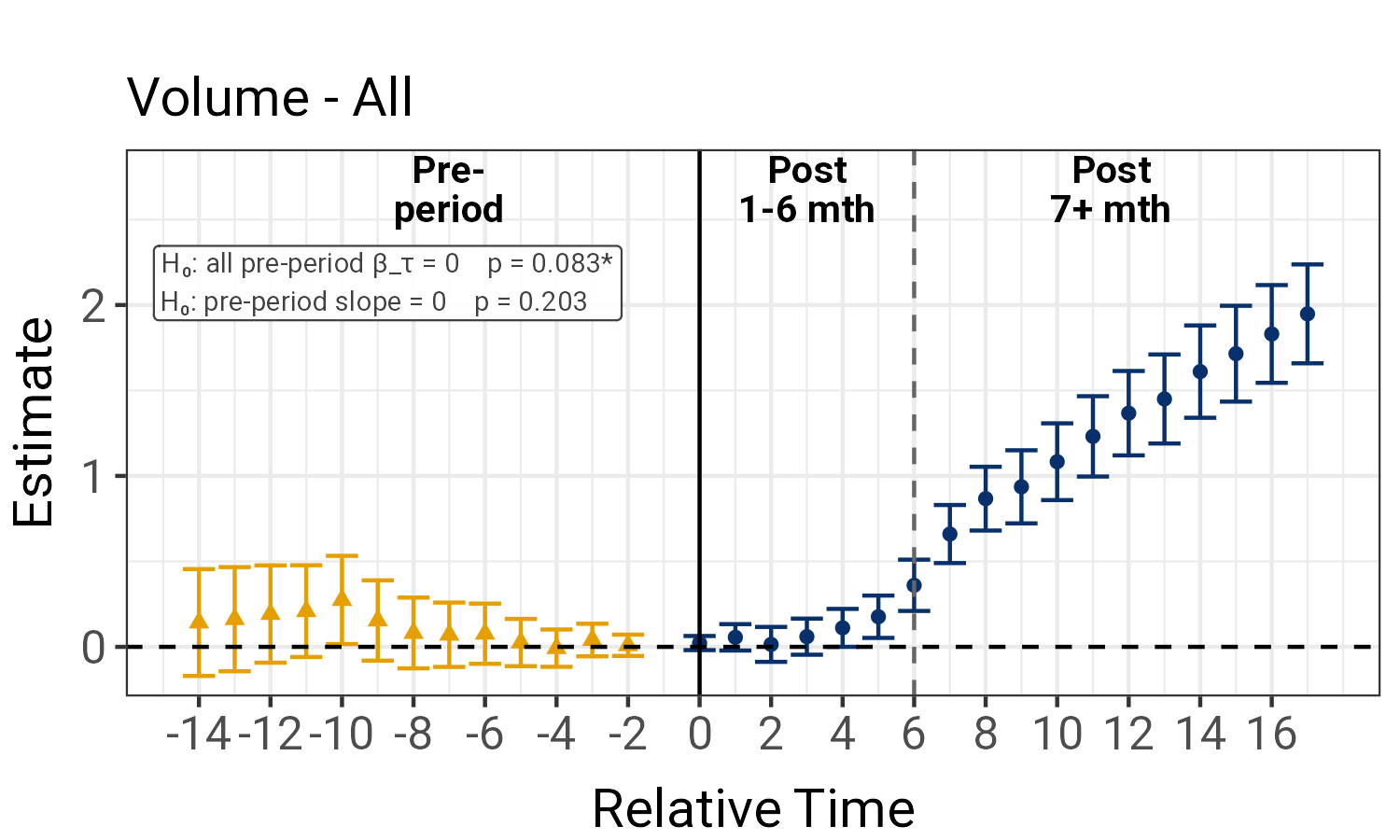
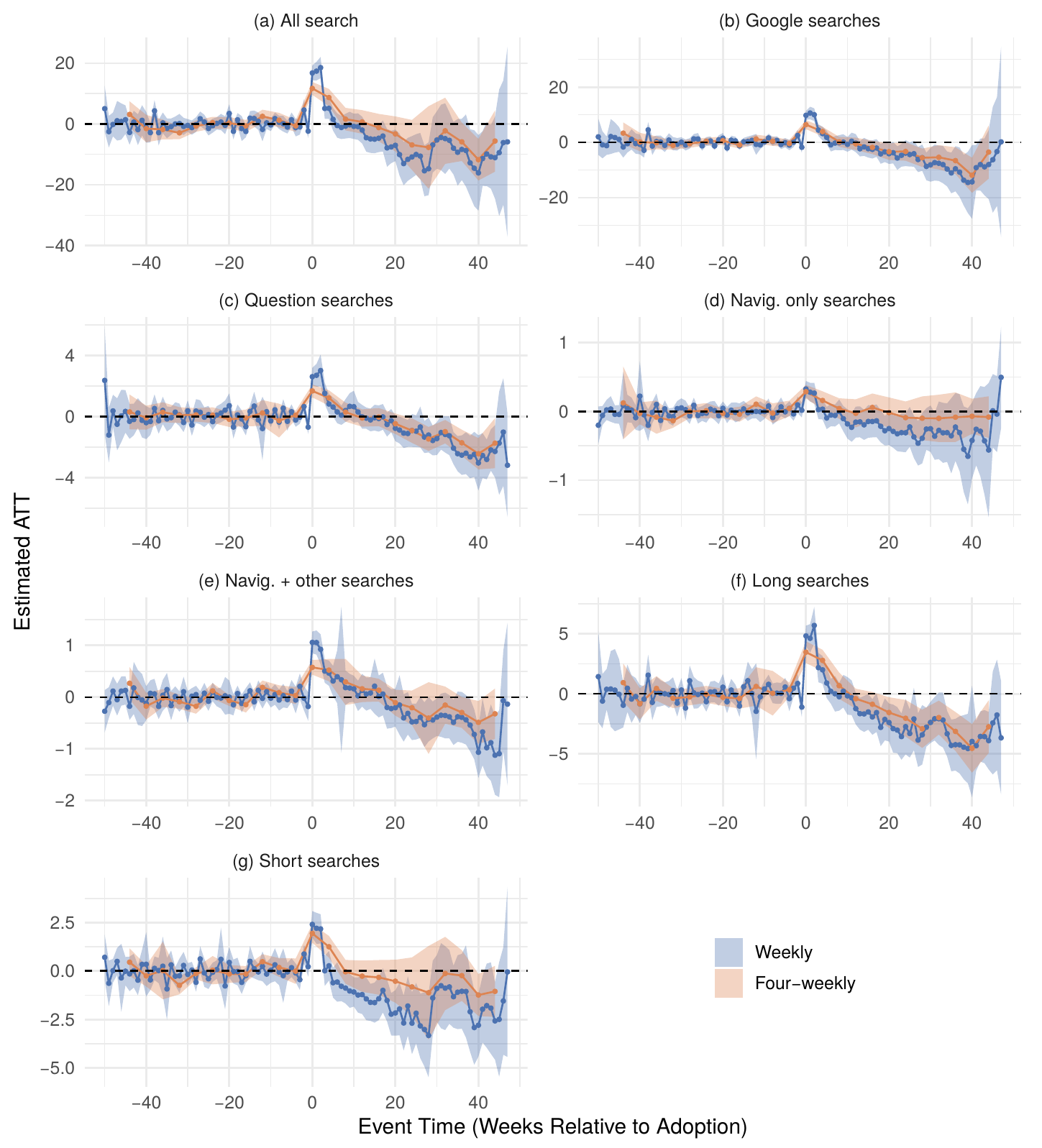
Staggered DiD: weekly searches around LLM adoption (all searches).

The Impact of Early LLM Adoption on Online User Behavior

with Nicolas Padilla, Anja Lambrecht, and Brett Hollenbeck

Accepted, Management Science, 2026

AbstractSSRN

The adoption of AI tools, and especially Large Language Models (LLMs), has the potential to significantly transform how users engage with information online, potentially serving as substitutes or complements to existing digital resources. We use detailed clickstream data from 2022 and 2023 to examine users' online behavior following the adoption of LLMs. We document a significant decrease in search activity, a typical entry point to content consumption. This decline emerges gradually, consistent with a learning period, but eventually adopters' level of search in traditional search engines falls by roughly a fifth to a third relative to the pre-adoption average, with heterogeneity across types of queries. Turning to website traffic, we document that while frequently visited websites are unaffected, we have suggestive evidence that smaller websites experience a significant drop in visits. We also document a significant drop in visits to education-related websites and heterogeneous effects across user-generated content platforms, with a pronounced negative effect on Stack Overflow, but find no significant effect on Wikipedia or Reddit. Finally, and consistent with these results, we document a significant drop in ad exposures, with the decline in display ads concentrated among consumers with high levels of retail activity. While our data capture an early period of LLM adoption, we argue that studying this period reveals economic forces that plausibly continue to operate, even as the magnitude of their effects may have changed as the web ecosystem has adapted to LLMs. We discuss implications for online content creators, GenAI firms, and public policy.

Working Papers

Video choice by AI label condition (online experiment).

Stated and Revealed Preferences for AI-Generated Content

with Jessica Fong and Olivia R. Natan

Revise and resubmit, Marketing Science, 2026

AbstractSSRN

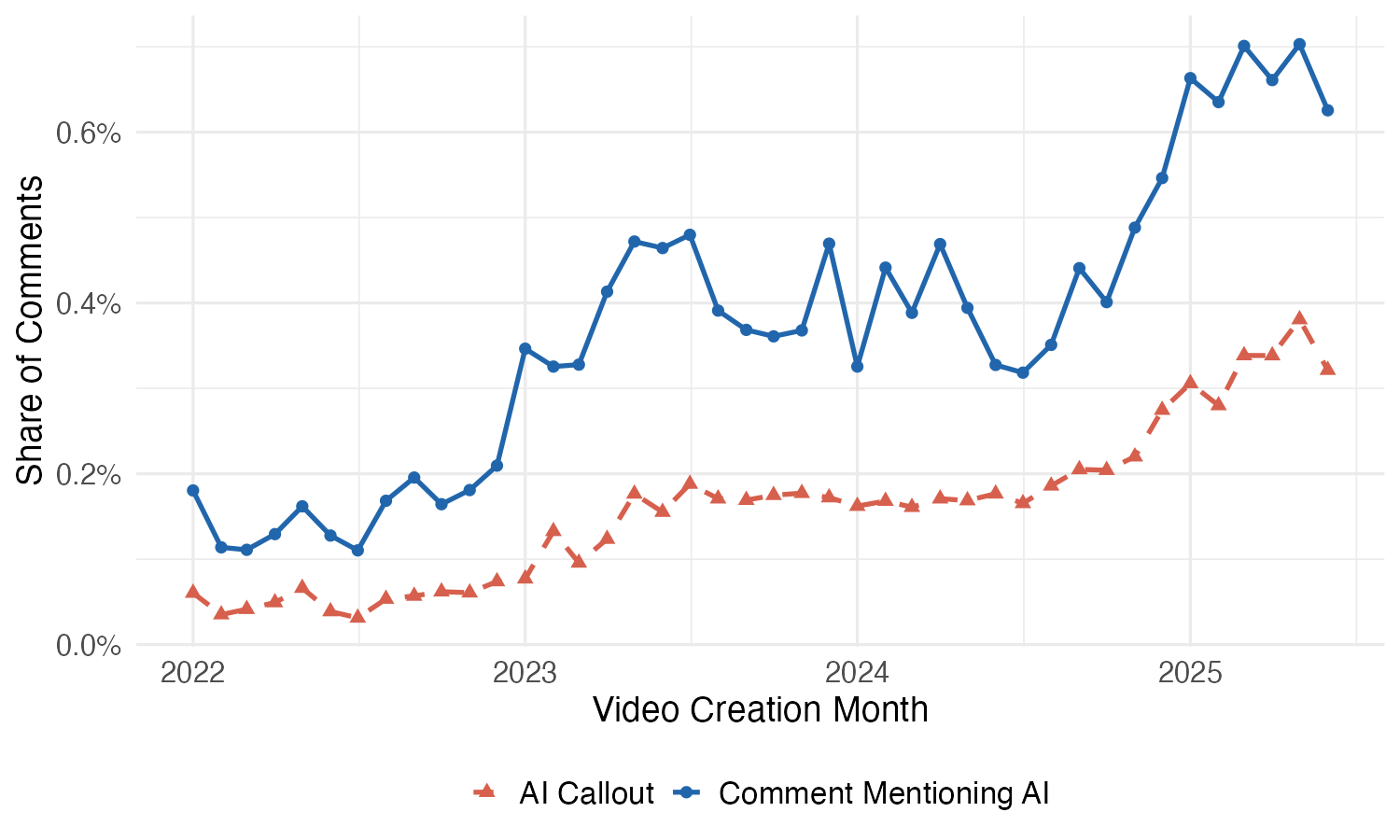
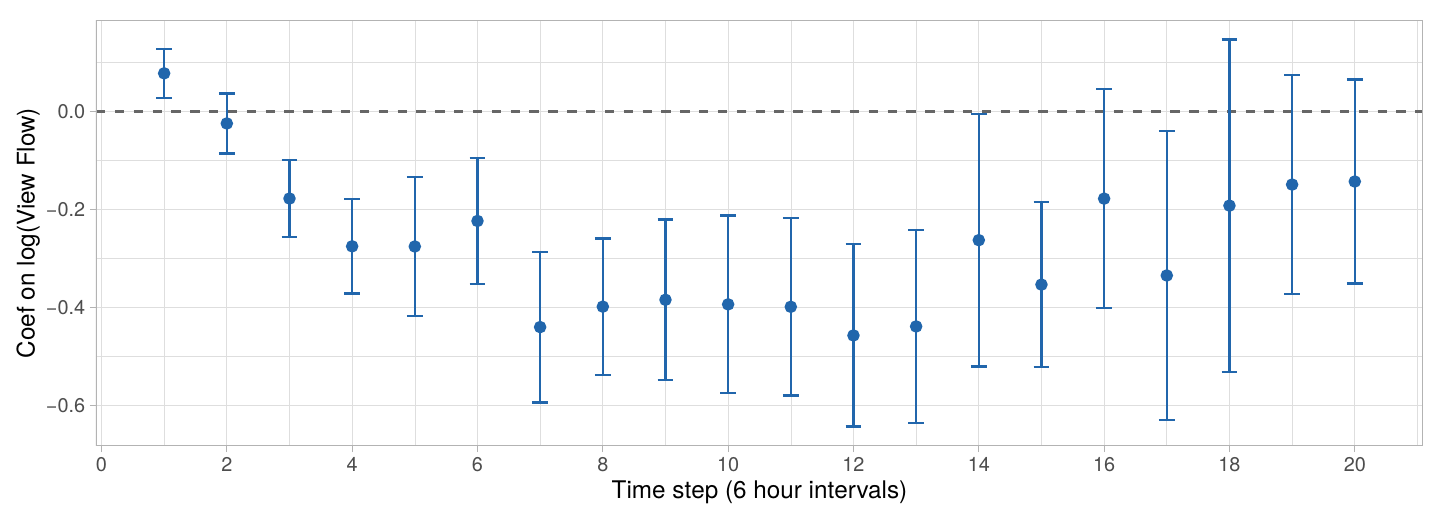
As AI-generated content proliferates on social media, the rise of terms like "AI slop" suggests viewers are averse to this content. We study whether this stated aversion translates into revealed preferences using a large-scale dataset of YouTube videos and comments, supplemented by an online experiment. We document that both the prevalence and negativity of comments mentioning AI in YouTube videos have risen over time. Exploiting within-video variation in when an AI mention first enters a video's top comments, we find that the appearance of an AI mention reduces views by 10% on average. The effect exists for short and long-form videos and is concentrated in smaller channels. An online experiment, which holds video content fixed and randomly varies AI disclosure at the selection and viewing stages, confirms these effects. Labeling a video as AI reduces selection probability by 23%, and exposure to an AI callout during viewing reduces watch time by 14% and lowers willingness to engage further with the creator's other videos.

Ads discontinuity: share of videos with mid-roll ads by video length.

Ad-funded Attention Markets and Antitrust: YouTube Content Economy

Working paper, 2025

AbstractPDF

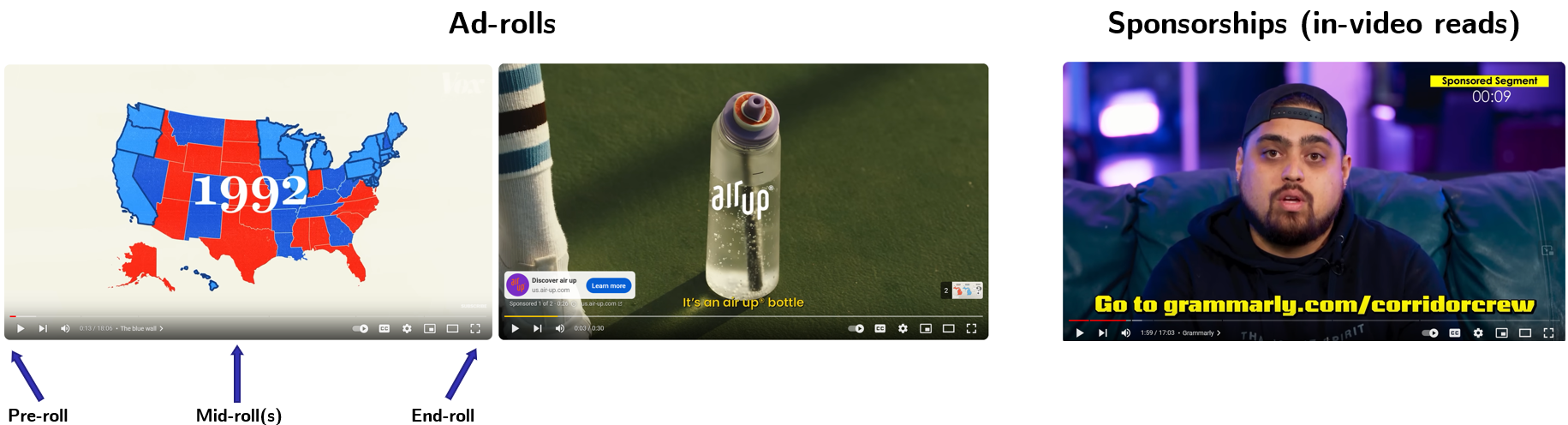
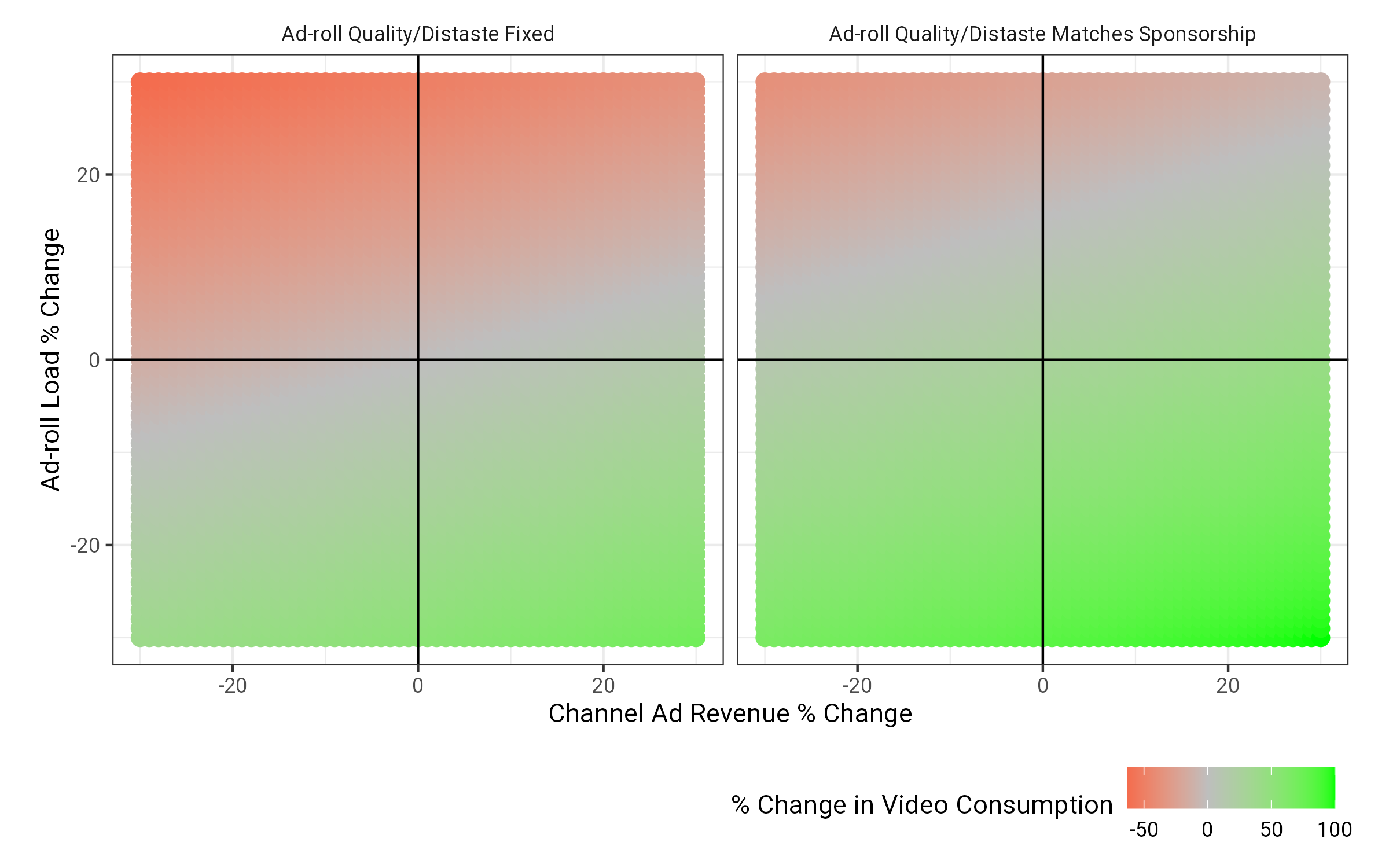
Many valuable digital products (e.g., YouTube, Google Maps, LLMs) are provided at no charge. But they are not "free" nor costless to supply; rather the "price" consumers pay is with attention to advertising, which funds their production. The importance of ads for enabling attention product markets is not well understood and elasticities important for welfare lack study. Despite this, the Department of Justice is suing Google to improve competition in the $224b upstream advertising market, with unclear effects on downstream consumers. Lower ad prices may reduce production and increase ad load, but ad quality improvements may benefit consumers. Using data on YouTube's $29b market, I apply RDDs and IVs to derive causal estimates of ad attention (price) elasticities of demand and supply to inform the welfare consequences of proposed antitrust action. Content creators can choose between platform ads (ad rolls) and disintermediated ads (sponsorships), with an additional ad unit reducing viewership by 22% and 7%, respectively. I use a simple structural model of video consumption and content creation to analyze the effects of a potential reduction in ad revenue and improved ad quality to understand consumer welfare under different antitrust outcomes.

Work in Progress

Growth of online degrees.

Competition and Awareness of Online College Degrees

with Matteo Magnaricotte

AbstractPDF

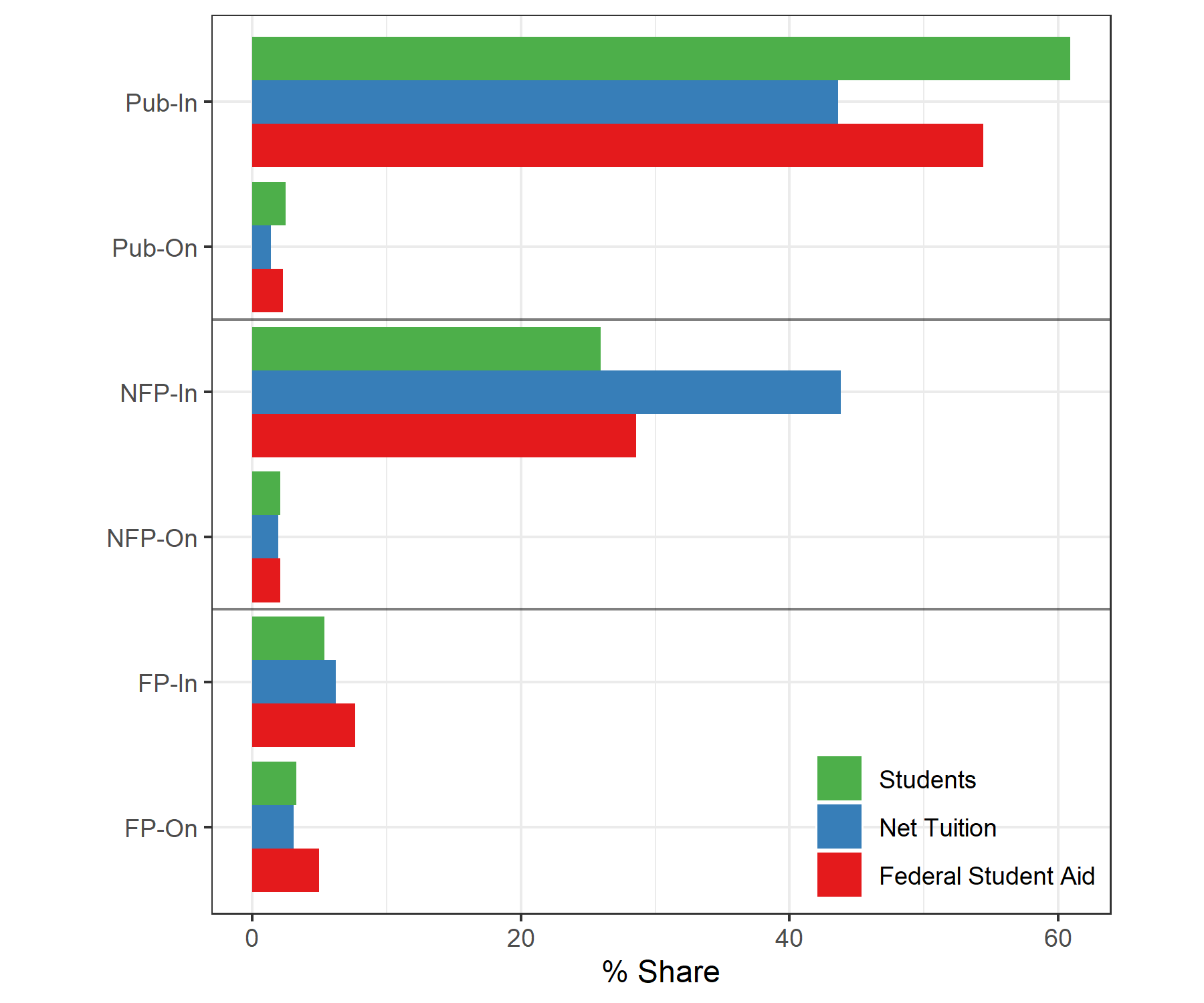
The share of US students enrolled in entirely-online college degrees has doubled in recent decades (from 5% in 2008 to 10% in 2015). The importance of online colleges as a differentiated product in the higher education market is likely to increase, particularly after the online learning experiment of the 2020 pandemic. Policymakers concerned about tuition and student debt growth are interested in whether online degrees could put downwards pressure on tuition and increase access. However, the effect of online degrees on student enrollment, tuition competition and post-graduation outcomes remains little studied. In principle, the online degree market should be highly competitive, as it lacks the geographic market power that in-person colleges wield and is highly scalable. However, limited awareness of online colleges may limit competition and advertising may influence the student online college search process. We provide evidence that online colleges: (i) cater to specific segments of students (e.g. mature age students with family); (ii) deliver a wide range of post-graduation outcomes that are no worse on average than in-person colleges; (iii) face stronger competition, but with little measurable spillover on in-person colleges; and (iv) use advertising to distort the information gathering process for potential students and increase enrollment.